How to Propagate Lilacs from Suckers (Easy Step by Step Guide)
Did you know you can grow new lilac bushes from the little shoots that pop up around the base of an established plant? Propagating lilacs from suckers is one of the easiest ways to grow more of these beautiful flowering shrubs, and you don’t need any special equipment or rooting hormone to do it!
Lilac suckers are young shoots that grow from the root system of a mature lilac. Many already have roots of their own, which makes them much easier to propagate than starting new plants from stem cuttings.
With a sharp shovel, a little patience, and the right technique, you can separate these shoots from the parent plant and grow them into new lilac bushes.
In this step-by-step tutorial, I’ll show you exactly how I propagate lilacs from suckers in my own garden, including when to dig them up, how to separate them without damaging the roots, and how to care for your new plants so they get off to a healthy start.
And the best part? You can grow more lilacs for free! Keep them to fill your garden with fragrant spring blooms or share them with gardening friends.
One important thing to know: If your lilac is grafted, suckers growing from below the graft may not produce the same flowers as the parent shrub. I’ll explain what to look for before you start.

This post contains affiliate links. If you make a purchase after clicking a link I may make a small commission at no added cost to you.
Propagating Lilacs from Suckers: At a Glance
Growing new lilac bushes from suckers is a simple, budget-friendly way to add more of these beautiful flowering shrubs to your garden. Here’s what you need to know before getting started.
| Best time to propagate | Early spring before active growth begins or fall after the leaves drop |
| Propagation method | Separating rooted suckers from an established lilac shrub |
| Difficulty level | Easy — beginner-friendly |
| Tools needed | Sharp shovel or spade, garden pruners, and a container if potting |
| Rooting hormone needed? | No, since you’re working with shoots that already have roots |
| Where to plant | Directly in the garden or in containers with drainage holes |
| Watering needs | Keep the soil evenly moist but never waterlogged while plants establish |
| Time until flowering | Usually 3 years, depending on the size and maturity of the sucker |
| Cost | Free if you already have an established lilac producing suckers! |
My tip: Choose healthy lilac suckers growing a little distance from the parent shrub. These are often easier to dig up with a good portion of their roots intact, giving your new plants a better chance of getting established.
What Are Lilac Suckers?
Lilac suckers are young shoots that grow from the root system of an established lilac bush. You’ll usually find them popping up around the base of the parent plant, sometimes several inches or even a few feet away.
Some gardeners consider these shoots a nuisance and simply mow them down or cut them off to keep their lilacs from spreading.
But I see them as free plants!
Many of these little shoots already have roots developing along the underground portion of the stem. With a little careful digging, you can separate them from the parent plant and grow an entirely new lilac bush.
This is one of my favorite ways to propagate lilacs because you’re giving an already-growing plant a new home rather than trying to encourage a stem cutting to develop roots.
Important: Lilac suckers from an own-root plant will grow into the same variety as the parent. However, if your lilac is grafted, shoots growing from the rootstock may produce a different lilac. Check whether your plant is grafted before propagating suckers if you want an exact copy of its flowers.
Why Propagate Lilacs from Suckers?
There are several reasons I love propagating lilacs this way.
First, it’s practically free! If you have an established lilac producing suckers, you already have a supply of potential new plants.
Second, it’s often easier and faster than rooting lilacs from stem cuttings. Because the suckers may already have roots, you’re giving them a head start.
And finally, it’s a wonderful way to share plants with friends and family.
The lilacs in this tutorial came from a beautiful old white lilac growing in a friend’s yard. She generously told me I could dig up as many suckers as I wanted.
Naturally, I wasn’t going to pass up that opportunity!
If you don’t have access to lilac suckers, you can also propagate lilacs from stem cuttings. I’ve had success with both methods, but when rooted suckers are available, they’re usually my first choice.
When Is the Best Time to Propagate Lilac Suckers?
Early spring and fall are generally the best times to separate and transplant lilac suckers.
In early spring, the soil is often moist and easier to dig, and the plants have the coming growing season to establish their roots.
Ideally, I like to move suckers before vigorous new growth begins. However, lilacs are fairly resilient, and I’ve successfully moved them at other times when the weather cooperated.
Fall is another excellent option, particularly after the leaves have dropped and the plants are dormant.
The important thing is to avoid transplanting during periods of extreme heat or when the ground is frozen.
If you’re gardening in an area with hot, dry summers like mine, I would choose spring or fall rather than trying to establish newly separated lilacs in the middle of summer.
How to Propagate Lilacs from Suckers: Step by Step
You don’t need fancy equipment to propagate lilacs from suckers.
Here’s what I use:
- A sharp shovel or spade
- Garden pruners
- A bucket of water to keep the roots from drying out
- Nursery pots with drainage holes, if potting
- Good-quality potting mix
A sharp shovel makes this job much easier, especially if you’re working in compacted soil.
Step 1: Choose a Healthy Lilac Sucker
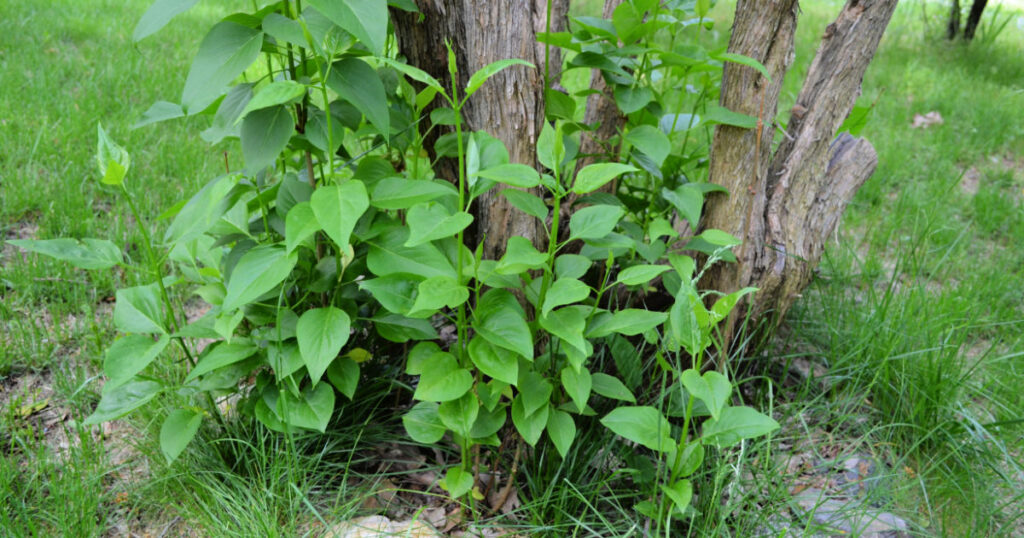
Start by looking around the base of your established lilac bush.
You’ll probably notice several young shoots growing up from the ground near the parent plant.
I prefer to choose healthy, vigorous suckers that are growing a little distance away from the main shrub.
Why?
Because they’re usually easier to dig around without disturbing the parent plant too much.
You also have more room to maneuver your shovel and a better chance of getting a good portion of the roots.
When I dug suckers from my friend’s white lilac, the soil was incredibly compacted. That made the job a bit more challenging, but it certainly didn’t stop me!
My tip: Choose suckers with healthy growth and, whenever possible, a well-developed root system. The more roots you can preserve, the better your new lilac’s chances of establishing quickly.
Step 2: Dig Around the Lilac Sucker
Once you’ve chosen your sucker, it’s time to get digging.
If the soil is loose, you may be able to carefully remove some of the soil around the shoot with your hands or a small garden tool.
Follow the underground stem or root back toward the parent plant.
This allows you to see where the sucker is connected and where roots have developed.
If your soil is hard and compacted, as mine was, you’ll probably need a sharp shovel.
Carefully work your shovel into the soil around the sucker, loosening it while trying to preserve as many roots as possible.
You don’t need to excavate the entire root system of the parent plant. Just expose enough of the sucker’s underground growth to separate it successfully.
Step 3: Separate the Sucker from the Parent Lilac
Once you’ve exposed the underground connection, you’re ready to separate the sucker.

If you can clearly see where it’s attached to the parent plant’s root system, use sharp pruners or a garden spade to cut through the connecting root.
Try to make the cut on the parent-plant side of the sucker’s own roots so you preserve as much of its root system as possible.
When working in very compacted soil, I sometimes use my sharp shovel to slice through the connecting root.
Place the shovel between the sucker and the parent plant, then push straight down to sever the connection.
You may need a little muscle for this part!
Once the connection is cut, gently lift the sucker from the ground, taking care to keep as many roots attached as possible.
Don’t worry if you lose a few roots in the process. Lilacs can be quite forgiving, although suckers with very few roots will have a harder time establishing.
My tip: Don’t choose a sucker based only on how tall or leafy it looks. A smaller shoot with a healthy root system is often a better candidate than a large shoot with hardly any roots.
Step 4: Keep the Lilac Roots Moist
Once you’ve separated your lilac sucker, don’t leave the exposed roots sitting in the sun or drying wind.
I like to keep a bucket of water nearby while I’m working.
As I dig each sucker, I can briefly place its roots in the water to keep them hydrated until I’m ready to pot everything up.
You can also wrap the roots in damp material and keep them in a shady location.
The important thing is to prevent the roots from drying out.
I’ve had occasions when something interrupted my gardening plans and the suckers ended up sitting in water longer than I intended. They survived, but I wouldn’t recommend leaving them submerged for days.
It’s much better to get them planted as soon as possible.

Step 5: Plant Your Lilac Suckers in Pots or in the Garden
Now comes the fun part — giving your new lilacs a home!
You have two options: pot them up temporarily or plant them directly in the garden.
I’ve done both successfully.
Option 1: Plant Lilac Suckers in Pots
I often pot up my newly separated lilac suckers, especially when I’m not quite sure where I want to plant them or when I plan to share them with friends.
Choose a container large enough to accommodate the roots without severely bending or crowding them.
I’ve used everything from taller 4-inch nursery pots to 1-gallon containers, depending on the size of the sucker and its roots.
Fill the container partway with a good-quality, well-draining potting mix.
Place your lilac sucker in the pot, spreading the roots out as naturally as possible.
Add more potting mix around the roots, keeping the plant at approximately the same depth it was growing before.
Gently firm the soil to eliminate large air pockets, then water thoroughly.
Make sure excess water can drain freely from the bottom of the container.
I like to keep newly potted lilacs in a sheltered location while they recover from being transplanted.
Once they’re growing well, I gradually move them into more sunlight.

Option 2: Plant Lilac Suckers Directly in the Garden
You don’t have to grow your lilac suckers in containers first.
If you already know where you want your new shrub to grow, you can plant it directly in the garden.
Choose a location with plenty of sunlight and well-draining soil.
Lilacs generally flower best when they receive at least six hours of direct sunlight daily.
Dig a hole wide enough to accommodate the roots without crowding them.
Set the sucker into the hole at approximately the same depth it was growing beside the parent plant.
Backfill with the soil you removed, gently firming it around the roots.
Water thoroughly to settle the soil.
Keep a close eye on your new lilac during its first growing season, particularly when the weather turns warm.
The goal is to keep the root zone adequately moist while the plant establishes, without leaving the soil constantly saturated.
Related: Garden Zones and what you need to know about them!

How to Care for Newly Propagated Lilacs
Separating and planting lilac suckers is fairly straightforward, but a little extra attention afterward can make a big difference.
Here are a few things I recommend.
Keep the soil adequately moist. Newly transplanted lilacs have smaller root systems than established shrubs. Check the soil regularly and water when needed, allowing excess moisture to drain away.
Protect them from extreme heat. If your lilac is showing signs of transplant stress, temporary afternoon shade can help while it recovers.
Hold off on fertilizer. Your new lilac doesn’t need a dose of fertilizer immediately after transplanting. Concentrate on healthy root establishment first.
Watch for wilting. Some drooping is common after transplanting, particularly if the roots were disturbed. Keep the soil appropriately moist and protect the plant from harsh afternoon sun while it recovers.
Be patient! Your new lilac may spend much of its first growing season developing roots rather than putting on lots of visible top growth.
That’s perfectly normal.
Once your new lilac is established, you can follow the same general care practices I share in my guide to growing beautiful lilacs.
How to Divide Lilac Suckers Growing in Pots
Here’s another way I’ve propagated lilacs that you might find useful.
Some lilac plants I had previously grown from cuttings were still in their nursery containers several months later.
When I checked on them, I noticed they had already started producing little suckers of their own!
Of course, I couldn’t resist turning those into more plants.
Since the root systems were still relatively small, dividing them was surprisingly easy.
Here’s how I did it.
1. Remove the lilac from its container.
Gently slide the entire plant and root ball out of the pot.
2. Locate the individual shoots.
Look for the original plant and the smaller suckers growing around it.

3. Separate the root systems.
Using a sharp garden knife or spade, carefully divide the root mass between the original plant and the suckers.
Try to make sure each division has a healthy portion of roots attached.

4. Repot each lilac separately.
Plant each division in its own container filled with fresh potting mix.
Water thoroughly and keep the newly divided plants sheltered while they recover.
When I tried this method, I ended up with the original mother plant and two new daughter plants, each growing happily in its own pot.
A few weeks later, they were looking strong and healthy without even a hint of transplant shock.
That’s the kind of propagation success that keeps me coming back for more!
What I’ve Learned from Propagating Lilacs
One of the things I love most about gardening is discovering how many plants we can grow without spending much money.
Propagating lilacs from suckers is a perfect example.
Even when I’ve had to dig through hard, compacted soil and haven’t managed to preserve as many roots as I’d like, I’ve still had excellent results.
In fact, I’ve had a 100% success rate with the suckers I’ve propagated using this method so far.
Of course, every garden is different, and results will depend on the health of the sucker, how many roots you can preserve, and the conditions after transplanting.
But don’t let the fear of doing it imperfectly stop you from trying.
Some of my favorite plants have come from divisions and cuttings shared by friends and neighbors.
And there’s something especially satisfying about growing a lilac that came from an old, established shrub with a little history behind it.
Whether you’re hoping to fill your garden with fragrant spring flowers or preserve a lilac that reminds you of someone special, propagating from suckers is a wonderful way to do it.
Happy gardening!
Lilac propagation is how you get a lilac just like Grandma’s. I wish you a sweet-smelling garden!
Watch me dig up some lilac suckers with a chipped shovel

FAQs about Propagating Lilacs
Just one more note, I credit my chickens and their leavings (doo) with a lot of my success in gardening, a great soil builder. But you don’t have to have chickens to build your soil.
easy organic soil
Build Healthy Soil
Building healthy soil is not only a budget-friendly way of gardening but it is better for the environment than bagged fertilizers. See how easy it is!
Want more garden and DIY fun? Sign up for our newsletter to be notified of the latest and greatest. No worries, it’s free.
Hi, I’m Pamela
With 45 years of hands-on gardening experience, I love sharing practical tips, proven techniques, and inspiration drawn from my own gardens. My goal is to nurture your confidence, spark your passion, and help make every step of your gardening journey more enjoyable.







You can take lilac suckers to propagate now, it won’t effect blooming but if you are taking cuttings then you should wait until after they bloom for that.
My lilacs are budding and starting to bloom. I’ve needed and wanted to propagate but I’ve always been uncertain about when, some say spring, some say fall… But with buds starting in March, that seems so early (and off my radar). Is it more about spring after blooms are spent or early fall long before the weather turns?
that is a great question and I supposed it depends upon the type of Lilac and its final size. Many recommend, in general, to plant the 4 feet apart as most Lilacs grow quite tall and wide. But you can easily experiment by planting them closer and getting a thicker hedge sooner.
I have 15 suckers that came out last year someone gifted me.
Was hoping to make a hedge out of it, and was wondering how far apart I should plant them? (:
That’s great, thank you!
Excellent advice. I followed your instructions and propagated half a dozen suckers by planting them directly into the ground, with 100% success. I also shared this article onto my Facebook page. Keep up the good work!
The suckers are how the plant rejuvenates itself. Many remove them as they start to get wider and wider. Here is an article on pruning that may help explain it. Pruning Lilacs
Do you have to remove the lilac suckers? If not what will they do to the mother plant?
The lilac will be different than the one on top. You would be better off taking cuttings to get the one you wish. Lilacs from Cuttings
It seems like my lilac is grafted. I removed some suckers and potted them. You mentioned it will not work with a grafted lilac. Do you just mean that the lilac will be different? Or should I not propagate from the suckers of this lilac?
We just visited family in New Hampshire and brought back a sucker to NW Arkansas. We sure would like to see this one survive and grow others. Thanks so much for the help.
Thank you so much for this information, I’ll begin propagating the 1940s lilac bush immediately, it’s 50 years long overdue! You have been very helpful. Thank you again!
Garden Hugs,
Dean D., Scranton, PA/ NYC
It does take years for them to establish and begin to bloom. At least 3 to 5 years. They are worth the wait though.
@Pamela, I love this idea but have one question. Years (many of them) ago I managed to root a piece of a lilac bush my father had. It grew but did not bloom for many years. Any ideas or suggestions on that? Thanks.
You are so welcome.
Oh wow, I noticed I have a lot of lilac suckers(not grafted) out front I can propogate. Knowing now that its easy to do I am excited! Excellent article and thank you for the tips! 🙂
The garage may be your best bet. Just be sure it does not dry out completely but you don’t want it wet either. If you have any windows in your garage have it as close to it as possible. As soon as temps start to warm up you will need to put it outside in a sheltered location as it wakes up for Spring. I wish you success with your baby lilac.
This was a great article, thank you so much. I have a lilac shoot I’ve been babying in a pot for a couple of months. (I think it was in shock at first but is better now.) It’s October and I’m afraid to plant it because I live in Rochester, NY and the winters can be brutal. Where should I keep it over the winter? In the garage? The house? How much light does it need in the winter? Thank you so much for any advise you can offer!
Hello Pamela! My neighbor actually cut the lilacs w/branches and leaves on…no roots though 🙁 Is there a way i can propagate them? Thanks in advanced.
Thank you so much for that post! The way you explain things makes it easy to read and remember. I will definitely try transplanting lilac shoots this week!
Lilacs can be kept in containers but they will not get that big and yes they will bloom. You can put more than one sucker in a pot but one alone in a container will sucker itself so I am not sure why you would want to put more than one in a pot. The light pink one sounds interesting and I wish you well in salvaging what you can.
Hello Pamela!
So happy to find your site!
A nearby home is going to be demolished to build yet another building! 🙁
There are lovely plants and trees in the garden that are going to be saved, so I would like to take the opportunity to salvage what I can and propagate for growing in pots on my balcony/terrace. There’s a light lavender lilac and a variety I’ve never seen with the tiniest light pink flowers, seems almost vine-like.
And there are quite a few rose bushes.
My questions are mostly about the lilacs and how long I can grow them in pots. If yes, will they flower? Can I put more than one “suckling” to a pot.
Many thanks for your advice! Like you, I can’t help myself from asking from pieces and bits of plants that I find attractive wherever I may be: a restaurant, hotel lobby, etc…
Take care and be safe!!!
TC
Very good question. If your ground is not frozen go ahead and move some. I don’t wait for after my last frost date but I don’t get the cold like you do. If you want to be on the safe side, move half now and then half just before your usual last front date. We are more than a month ahead of schedule this year as we have had such warm weather. (2020)
I live in northwest Montana, I think we r zone 3 or 4.. it is almost March 1 and had very mild winter, I just took over this property and have lilac shoots every where… When can I move them to where I would like them… Do I need to wait till last frost, or would they be ok to start?
I have a lilac sucker that has been growing in a clay pot since last Spring. I had knee surgery in late summer and it did not get it planted into the ground and it is now the end of October. Can it stay outside in the pot or does it need some protection to get through the winter? in an unheated garage maybe?
I am not sure if it will help insure success, I have never tried it. My guess is really since the suckers should already have roots that you would be better off adding a big of this mycorrhizal inoculant
Hello, great article!
I’m new to gardening and have a friend with a well established lilac bush and many suckers she’s giving me. I have rooting powder which I know is used for propagating cuttings but can I also use it to help to ensure success for lilac suckers prior to planting?
Thank you for this great article! Do you think it is too late in the season to try it this in the ground? We live in central WI.
I don’t know very much about chokecherries except they will sucker and the suckers can be potted or can be directly planted. Keep watered and you should have a nice tree. They do grow into a large fruit tree.
I love chokecherries other than the last time I picked the wild berries I discovered had asthma problems and my skin itched for two days. I absolutely love chokecherry jam/jelly.
Nothing, it is in shock and will recover if you keep it moist and if it has turned hot in your area give it some shade to let it recover. Give the leaves a mist of water twice a day to help.
Hi Pamela, I just propagated a lilac sucker from the main lilac bush the way you showed in your video…..the problem I’m having now is the leaves are wilting on it. What did I do wrong?
Thank you,
Nikki
Hi Theresa, I have one but it has not thrived for me and what blooms I do get just don’t have that wonderful scent of the heirlooms. Also it is still under a patent and I won’t intentionally infringe on patent rights, so I have not tried to propagate it.
Good morning! I just came along your blog. I’m wondering if you have ever tried the Bloomerang bushes, and if you’ve tried splitting/propagating them? I have three large established bushes that are wonderful. They bloom 3-4 times every year, and are really thriving. I would love to be able to split them up and gift to some friends, but I can’t find any info on how/when/if it works. Thank you!
You can plant the newly dug up suckers immediately just keep them well hydrated.
How soon should you plant the newly propagated lilacs? It is late May and they are toward the end of their bloom time. We live in the Pacific NW less than a 100 miles from the Canadian border, so our summers are short.
Thank You so very much for the video. I have around 10-12 suckers coming off of my double bloomer lilac tree.
Thank You, Carol. C
I owned an open lot that had 3 lovely, but very large lilac bushes on it. At one time a carriage house had sat on the property with the lilac bushes being the only remaining reminder. We were building a garage on that site so the bushes had to go. They were far to big to dig up by hand and my deadline to move them was VERY short. I ended up taking the extreme step of wrapping a tow chain around each one then pulling the bush out with our ATV. The ground was soft and they actually came out quite easily. Attached roots came with each bush so I decided to transplant them around my home, not really expecting them to survive. But believe it or not, all 3 bushes survived and are as big as ever! They bloomed beautifully the very next year and have ever since! I don’t recommend this method (I was desperate) but it does support the idea that lilacs are very hardy and worth trying to propagate and transplant.
And then what… when do I transplant into the ground? There’s a lilac bush on a vacant lot in my area that needs some attention it is in a “too shady” spot and I’ve always wanted to dig up some of it! I suppose I could just dig up some of the bush, but the sucker route seems somewhat easier.
Yes, if you trim it as you say it should bush out from branching but search online for the variety you have to double check. I wish you success, a privacy hedge of lilacs sounds lovely.
Loved this article as I want to build privacy from buses using lilacs! If I snip tops off once fully established will it bush out? I have one about fot tall and wide and I will be checking for suckers. I’d like it to get to about five footh high and if possible very full from the stem if possible
So sorry Trina, I do no know a thing about choke cherry trees.
Thank you for your info. Very helpful. Do you know anything about chokecherry trees?
Go ahead and dig them up. If it is cool enough you could put it directly into the ground, keep it moist and protect from hot sun. I keep mine in pots until I know exactly where I want to plant them or gift them to someone. I have one that has been in its pot for 3 years.
It is Sept. 1 is it too late to dig up a sucker,pot it and then plant it before winter? Or would it be better to do it in the spring? If spring when is a good time? How long do you leave them in the pots? Thank you
It may work just fine, be sure and protect them from direct sun if the weather is particularly warm and keep well watered until you know they have rooted well.
Darn. I wish I’d read this a couple weeks ago. I dug two shoots from my Donald Wyman and put directly in the ground. Was this a big mistake? It’s May 27.
I would wait for Fall when the weather is cooler so the lilac can get growing and established before winter hits but not be baked by the sun. It is too easy for the plant to dry out in very hot weather.
Hi Pamela,
Thank you for sharing this info! I have a couple questions. How big should the sucker grow before planting it in the ground? Would it be best to wait until fall? Summers here can be in the 90s for a month straight.
There are so many variables that it is hard to say but check out my post on How to Grow Lilacs for some suggestions. The ones that bloom the best in our neighborhood seem to thrive on neglect.
I did this once. The plant grew nice in the pot. Gifted it to a friend who planted it in her yard. Grew very well in her yard but never blossomed. Any idea why?
Just give it a whirl, it won’t hurt it. If you have had a late freeze it can affect them too. Last year most of the buds were zapped by a freeze here so no amount of beating would help.
I guess it’s too late to beat the trunk this year, it’s April 19th and there should already be a little bud forming, so when should you do this? My seedling has been in a pot for 2 years now so I’ll beat it… When? I would love for it to bloom. I have red, blue (French) and one that’s lavender with red outline.
Mine won’t bloom, I transplanted 3 different lilacs before I moved, I loved them so much but they won’t flower, I need help!
If they are done blooming then it is the perfect time. 🙂
I just discovered your blog. Thank you for your advice. What a blessing! Can I propagate them now? Beginning of June? Smiles
Thanks, Don. I am just addicted to propagation. I have no idea why so I keep trying different things. Then I pass on the hard earned knowledge I reap. 🙂 I am a notorious “neighborhood cruiser” myself. Living in an older established neighborhood has its perks. Lots of vintage plants that have been around and thriving for decades.
Pamela
Thanks for this article….I have always loved lilacs, tried several times unsuccessfully to root cuttings off the plants, but managed a few from suckers. Now I am cruising the neighborhood looking for all the people with lilacs in bloom 🙂
You are awesome
Don
If you get one Dawn, please let me know how it does. If it really reblooms enough to make it worth the investment. 🙂
Pam no I have not but now you have me curious and I want one. I will look at the nursery when I go this week. Thanks for info 🙂
I call those little spots like yours behind the barn as my “nursery beds”, it is where baby plant starts get tucked until they are growing healthy and strong ready to be moved. I am revamping mine. Have you tried the Boomerang variety that are supposed to keep on blooming? I am curious if they really do perform well.
Great minds think alike. I was just thinking I should do a post on my shabby little greenhouse that has been through a lot of abuse and yet is still such a grand place to play.
I am sorry you are having a hard time with it, I am not sure what is wrong. I just went to the page and tested it and the Pin it button showed up on the upper left corner, on my laptop, and on my desk top it was more to the right but it was there. I clicked through as well to be sure it worked and it did. I hope is was a momentary glitch and now has been fixed. Please try again and let me know if there is still a problem, so I can make sure and get it resolved.
Fantastic tips Pam. The only way I get new lilacs is from digging my friends suckers. I have a mound of soil behind the barn that I stick them while they take root, and then move them from there. I’m hoping the one I transplanted a years ago is white, it’s the only color I don’t’ have.
I have enjoyed reading your blog and the wonderful pictures that you display. I would like to know how you put together the potting area, tables etc. I have an old school table, the legs are adjustable pipe-like fixtures and the top has cubbies under it and it is made from thick plywood with formica on the top. The top is needing replaced because of our rainy weather, and the water that seeps through the edges. I have some trays Like I see in some of your pictures, but wonder what other materials you use for your work tables. Can you do a blog on your potting shed and its fixtures, please. If you have already done this, how might I find it.
Thank you, love your site.
I wanted to pin to my Pinterest board, but there’s no “pin”
It probably does work, my great granny used to make us cut a switch from the willow tree. She could make your legs sting. 🙂 It did no damage, but we got the message clear enough. She was only 4 feet tall but we were in awe of her, even my boy cousins when they got 6 feet tall minded Granny. 🙂
What a beautiful memory.
Thank you for your help. I will remember the hint about the rubber hose on the trunk. Does that also work on children? Thanks again.
I pinned all three post about lilacs (for future reference). One of my favorite childhood memories is visiting a friend of my mother’s and sitting under her enormous lilac bush and reading.
You are welcome. I am eyeing a neighbors bush that has the most beautiful deep purple flowers on it. I need to work up the courage to ask if I can dig up some of the suckers coming from around it soon before the ground gets drier and harder to dig.
No you are not doing anything wrong. It can take up to 3 years to get blooms on a new lilac. If after that time you still do not get blooms, try beating it with a rubber hose around the trunk, it will shock it and then it will bloom. No, I am not joking. 🙂
Thank you Elizabeth! That is from my Rooting Roses post I share a week or so ago. My easiest method yet on rooting roses and I love it. Here is the link, in case you want to see it. http://www.flowerpatchfarmhouse.com/rooting-roses-from-cuttings-or-slips/
Pamela since you wrote about Lilacs I thought you might be able to answer this question for me. For Mother’s Day 2015 I received a beautiful Lilac Tree. I planted it in the front yard and it is doing very well but . . . . I don’t have any blooms on it this year. Does it take awhile to get blooms or am I doing something wrong?
You are a very smart lady!
I couldn’t help but notice in your ” propagating lilacs from suckers”
That in one picture you had a Starbucks cup with a dome lid using as a ” temporary hothouse or green house
Gotta love it thank you for all you share !!!
That was wonderful. You explained it so well. Thanks